A Genius and a Legend Named Cudjo - ZORA NEALE HURSTON'S LIFE AND INTERVIEW OF ONE OF THE LAST SLAVE SHIP SURVIVORS
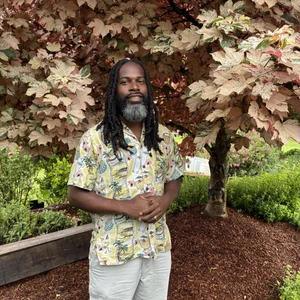
Orlando, Fl 2021: It’s been 3 months since Docta Get Wright left the Wild West, performing his quarterly journalistic duties. Upon his unexpected discoveries, he telegrams back home to his beloved colleague and friend, Sharp Eye, the FullClip gang’s private investigator, whom he loves like a play cousin. These are his findings…
Sharp Eye,
Ok, so you remember when I told you about the movie I saw, Their Eyes Were Watching God? The movie where Oprah was the producer, and it had Halle Berry in it and the bright dude from Barber Shop? He went by Tea Cake in the movie. Yeah, so in the movie the characters actually went to The Muck. Remember I was like that’s crazy how somebody actually acknowledged The Muck in a movie? I mean Tea Cake even took it as far as telling Halle Berry about how free it was down there, like how it really is low key. Tell me why…
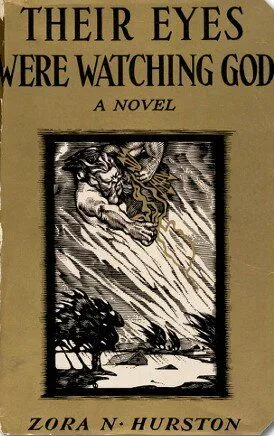
Their Eyes Were Watching God original 1937 cover
the movie turned out to be from a book by a famous, black author named Zora Neale Hurston. She was popular during the Harlem Renaissance. What’s wild is that in the movie they talked about Eatonville, Florida, which is one of the first all black towns in America. Come to find out Zora Hurston is from there. In real life though. She was born in Alabama and moved there a few years later. Go figure she know about The Muck, right? Once I found that out I had to start digging deeper. What I found out next, I wasn’t prepared for.. I ain even gon lie.
This lady was not only a folklorist, novelist, anthropologist, and dramatist, she was also a journalist. She wasn’t just any journalist. She actually did a interview with the last slave. Ok, I’m lying. He was actually the 3rd to the last known survivor from last known U.S. slave ship called, The Clotilda. Yeah… how crazy is that? Bro… hearing what he had to say broke my heart. So it’s kinda bitter-sweet.
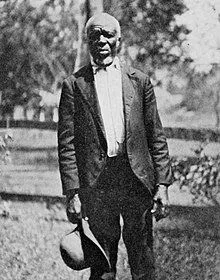
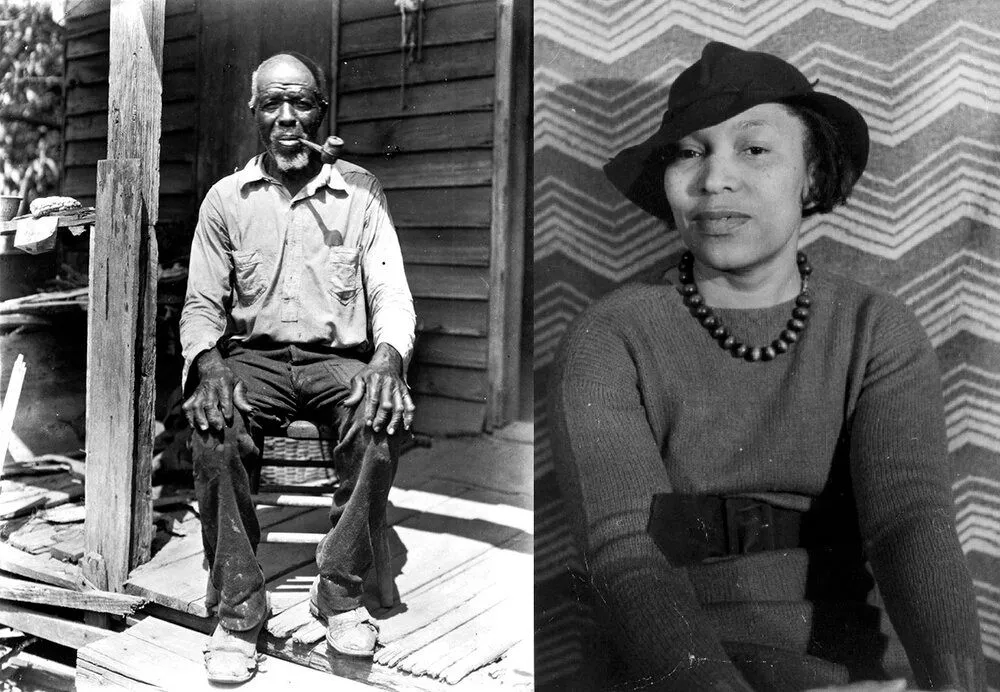
Cudjo Lewis
So he was named Cudjo Lewis here, but that’s not even his original name. His original name is Ouale Kossola. He was brought over in 1860 when the international slave trade had already been deemed illegal for several years. Because of that, they brought them in at night and made them hide in a swamp for several days. They then turned around and set the 86 foot boat on fire to hide everything. During their interviews in the late 1920s through early 1930s, Ouale broke down how it played out like this:
“We very sorry to be parted from one ’nother… We seventy days cross de water from de Affica soil, and now dey part us from one ’nother. Derefore we cry. Our grief so heavy look lak we cain stand it. I think maybe I die in my sleep when I dream about my mama.”
Keep in mind, they didn’t even speak the same language as everybody else,
“We doan know why we be bring ’way from our country to work lak dis… Everybody lookee at us strange. We want to talk wid de udder colored folkses but dey doan know whut we say.”
I mean, just the way they interacted with one another hits home cause they remind you of family back home. Their interaction, the way they respond to trauma.. Just listen to this audio piece in regards to a previous written book by Ms. Hurston called Barracoon: The Story of the Last "Black Cargo”.
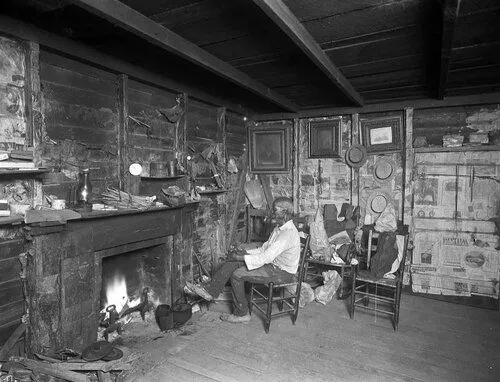
Ouale Kossola chillin at the crib
At this point, I’m like “why haven’t I heard of this lady before”? You would think she was subpar as a writer being that this is all brand new, right? Nah. In 2005, Time released a All Time 100 Novels list, within that I found the classics we had to read in school like The Great Gatsby and To Kill a Mockingbird. Guess what else was named on the list… Their Eyes Were Watching God.
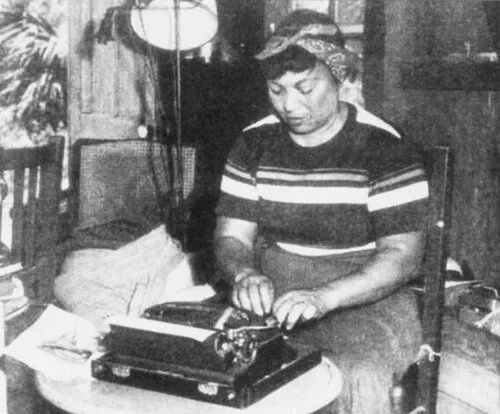
a picture of Zora likely typing up a classic
That gift of hers came at a cost though. At 13, she was pretty much left to fend for herself when her mama died. Her dad, who was a minister and mayor of Eatonville, remarried and sent her off to boarding school before they eventually stopped paying the tuition and she got kicked out. She struggled for awhile as an undersized maid before finally working as a maid for a lead singer in a theater company. That’s when her gifts began to be quickened. I take it that’s where the line from Their Eyes Were Watching God comes from when they say, “Two things everybody’s got tuh do fuh thevselves. They got tuh go tuh God, and they got tuh find out about livin’ fuh thevselves.”
At the age of 26, she wanted to go back and finish high school, so she lied about her age and said she was born in 1901 instead of 1891. She did this because state laws offered free school for people of color between the ages of 16 and 20. Her plan worked. She went on to enroll in a few schools like what’s known today as Morgan State and even Howard University. Being that she was gettin it out da mud, she took advantage of much needed financial help from people that crossed her path and saw her potential.
During this point in her life, she decided to move to Harlem during the Harlem Renaissance, where she connected with black artists, writers, musicians, and more. Along with quickly becoming recognized, she connected with notable figures, including Langston Hughes, and they eventually became close friends. However, make no mistake, between the Jim Crow south and the growing pains of her career, the struggle was real…
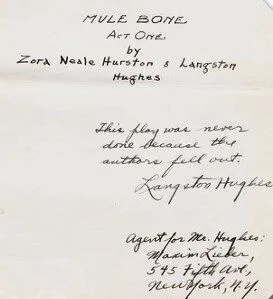
That one time Zora and Langston was beefing over money, ending their friendship
Zora, a true folklorist who flourished as a writer due to her childhood exposure to the spirited people of Eatonville, not only faced challenges financially, from family, from her close friend, from failed marriages, and from racism, she was also criticized throughout her career as a writer. Even with the way she chose to tell the story of Cudjo, she was accused of mocking how black people spoke, along with being accused of not speaking towards the struggles of blacks at the time. She wasn’t trying to hear it saying, “I know I cannot straighten out with a few pen-strokes what God and men took centuries to mess up. So I tried to deal with life as we actually live it—not as sociologists imagine it." She also mentioned, “There is over-simplification of the Negro… He is either pictured … as happy, picking his banjo, or … low, miserable and crying.” It also didn’t help that her tone empowered women and criticized men at times in an era where that narrative wasn’t fully accepted. Nevertheless, she kept pumping out the classics…
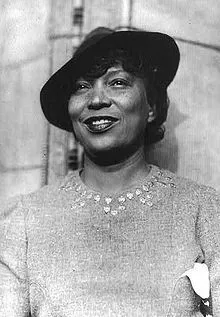
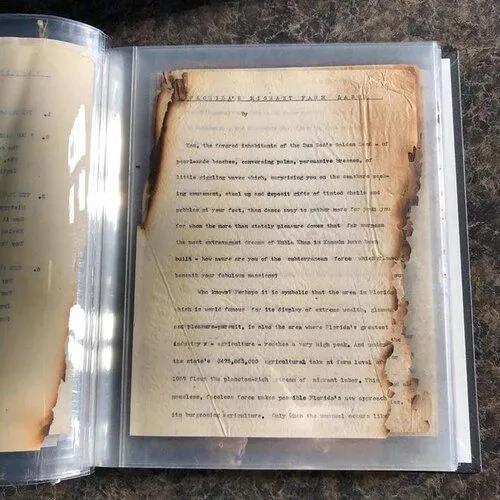
Adding insult to injury, the Great Depression hit, killing the demand for the fruitful, colorful, art form that the Harlem Renaissance and its icons brought to society. Struggling to get her works published, the edgy, optimistic, visionary continued to face poverty in her latter years. After being admitted into a nursing home and suffering a fatal stroke on January 28th, 1960, her papers were ordered to be burned. Fortunately, her deputy friend, Patrick DuVal, stopped by and put the fire out, saving the works that were eventually given to the University of Florida as well as donated.
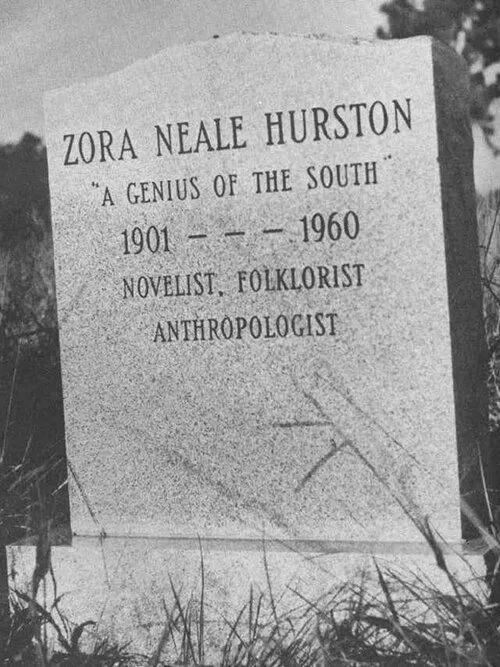
It wasn’t until 1973 when Alice Walker, author of The Color Purple, decided to honor her legacy that Zora’s work began to gain its fully deserved recognition. Alice, along with Charlotte D. Hunt, visited what was considered Zora’s grave, which was still unmarked due to a lack of funds, and had it inscribed. By the late 1970s, her books were back in print. Her previous plays, which were never produced, made it to the stage as well, including Mule Bone.
Despite the delay in full recognition, Zora Neale Hurston’s work went on to be appreciated for how it was initially meant to be received, validating the title that Alice Walker had inscribed, “A Genius of the South”.